Supercharge Your Warehouse: Cutting Order Processing Time with Advanced WMS
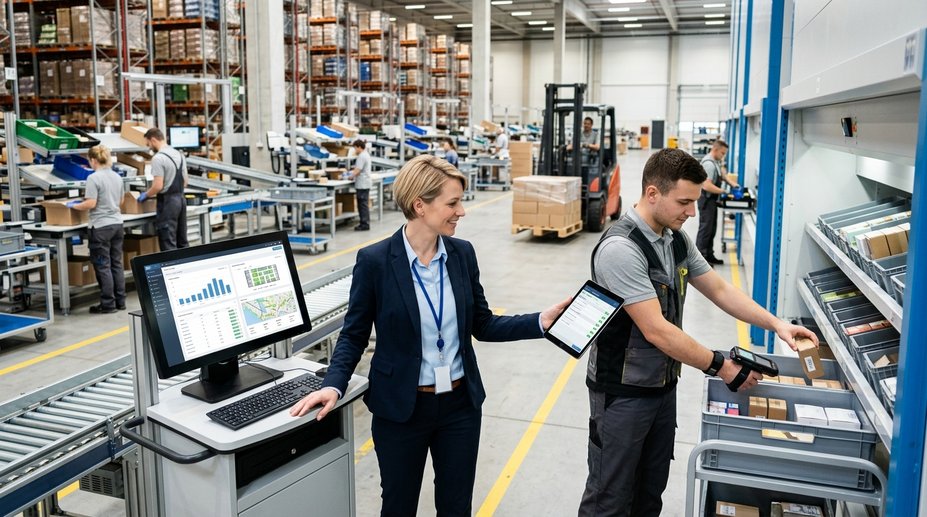
Are you grappling with sluggish order fulfillment, spiraling operational costs, and an ever-growing pile of customer complaints? It's time to revolutionize your logistics. An advanced Warehouse Management System (WMS) isn't just a software upgrade; it's a strategic imperative for businesses aiming to drastically slash order processing time and boost overall efficiency in today's competitive landscape.
The Urgency of Speed: Why Order Processing Time Matters More Than Ever
In the relentless pace of modern commerce, speed is currency. Consumers, whether B2B or B2C, expect rapid, accurate fulfillment. Delayed orders, picking errors, or inventory discrepancies don't just frustrate customers; they erode brand loyalty and impact your bottom line. An advanced WMS directly addresses these pain points, transforming your warehouse from a cost center into a competitive advantage.
Consider the broader implications: a seamless customer experience, optimized resource utilization, and invaluable data insights. The goal isn't just to move products faster, but smarter. Businesses that embrace cutting-edge solutions for order fulfillment optimization are better positioned for sustainable growth and market leadership.
Integrating for Impact: WMS Software at the Core of Your ERP Strategy
The true power of an advanced WMS software unfolds when it's seamlessly integrated with your existing Enterprise Resource Planning (ERP) system. This synergy creates a unified data ecosystem, breaking down silos between departments like sales, finance, and operations. When your WMS and ERP communicate in real-time, order data flows instantly from customer placement to warehouse execution, eliminating manual re-entry and significantly reducing the risk of errors.
This tight integration is a cornerstone of modern ERP trends, where holistic visibility and automation are paramount. For instance, an order placed through an e-commerce platform linked to your ERP can trigger immediate picking instructions in your WMS, factoring in current stock levels and optimal picking routes. This cohesive approach accelerates the entire order-to-cash cycle and is vital for maintaining a lean and agile supply chain.
Unlocking Efficiency: Key Features of a High-Impact WMS
An advanced WMS offers a suite of functionalities designed to optimize every facet of your warehouse operations. It moves beyond simple inventory tracking, providing sophisticated tools that intelligently manage resources and workflows.
- Real-time Inventory Tracking and Visibility: Gone are the days of manual stock counts and blind spots. A robust WMS provides precise, real-time visibility into every item's location, status, and movement within the warehouse. This includes detailed information on incoming shipments, pending orders, and available stock, crucial for preventing stockouts and overstocking. This enhanced inventory tracking capability is foundational for all subsequent optimizations.
- Optimized Receiving and Put-away: Upon arrival, items are scanned and directed to their optimal storage locations based on factors like frequency of access, size, and temperature requirements. This intelligent put-away strategy maximizes space utilization and streamlines future picking processes.
- Intelligent Order Picking Strategies: The WMS can orchestrate various picking methods – batch picking, zone picking, wave picking – to minimize travel time and maximize picker productivity. It generates optimized picking routes, guiding staff through the warehouse in the most efficient sequence, dramatically improving order picking accuracy and speed.
- Streamlined Packing and Shipping: Automated packing stations, guided by the WMS, ensure correct items are packaged, generate accurate shipping labels, and optimize box sizes. The system can even integrate with carrier services to select the most cost-effective and fastest shipping options.
- Automated Data Capture: Utilizing barcode scanners, RFID technology, and even voice picking, the WMS automates data capture at every touchpoint. This reduces human error, updates inventory records instantly, and accelerates transaction processing.
Driving Down Delays: Practical Steps to Reduce Order Cycle Time
Implementing an advanced WMS is the first step; optimizing its use is key to truly transform your operations. Here are actionable strategies to significantly reduce order cycle time:
- Automate Data Entry and Order Ingestion: Seamlessly integrate your WMS with ERP and e-commerce platforms to eliminate manual data entry errors and drastically accelerate order intake. This ensures that as soon as an order is placed, it's immediately ready for processing in the warehouse.
- Optimize Picking Strategies: Implement batch picking, zone picking, or wave picking supported by real-time routing algorithms to minimize travel time across the warehouse floor. By grouping orders or assigning specific zones, your team spends less time walking and more time picking.
- Leverage Real-Time Inventory Tracking: Utilize RFID technology and barcode scanning to ensure precise, real-time visibility into stock levels, preventing stockouts and picking delays. Knowing exactly what you have and where it is eliminates wasted time searching for items.
- Streamline Packing and Shipping: Automate packing slip generation, shipping label printing, and carrier selection to eliminate bottlenecks at dispatch stations. This includes integrating with shipping carriers to automatically generate the best shipping options and documentation.
- Integrate Smart Warehouse Technologies: Combine your WMS with IoT sensors, automated guided vehicles (AGVs), or voice-directed picking to further enhance operational speed. These technologies can guide pickers, move inventory, and provide real-time environmental data, all coordinated by the WMS.
- Monitor Key Performance Metrics: Continuously analyze metrics like order cycle time, picking accuracy, and dock-to-stock time to identify and resolve operational bottlenecks. Data-driven insights are crucial for ongoing improvement in order processing speed.
- Train and Empower Your Staff: Provide ongoing hands-on training for warehouse personnel to maximize software adoption and maintain peak fulfillment efficiency. A well-trained team is crucial for leveraging the full capabilities of your WMS.
The Future is Automated: Embracing Warehouse Automation and Supply Chain Efficiency
Warehouse automation is no longer a luxury but a strategic necessity. An advanced WMS acts as the brain behind these automated operations, orchestrating robots, conveyors, and automated storage and retrieval systems (AS/RS). This convergence of software and hardware dramatically enhances throughput, reduces labor costs, and improves safety.
According to a recent report, the global warehouse automation market is projected to reach USD 74.3 billion by 2025, growing at a CAGR of 13.9% from 2020. This indicates a strong trend towards automating warehouse functions to meet increasing demands and improve efficiency. Source: MarketsandMarkets
This integration of WMS with automation tools provides unparalleled supply chain efficiency. It enables companies to respond dynamically to market changes, optimize inventory levels across multiple locations, and ensure rapid, accurate fulfillment even during peak seasons. Furthermore, the data generated by these automated systems, managed by the WMS, offers deep insights into operational performance, allowing for continuous optimization and predictive analysis.
Beyond the Basics: Advanced Warehouse Workflow Management
A truly advanced WMS doesn't just manage inventory; it manages the entire flow of work within your warehouse. This involves sophisticated algorithms that consider current workload, staff availability, equipment status, and order priority to dynamically assign tasks and optimize routes. This level of warehouse workflow management ensures that resources are always deployed optimally, preventing bottlenecks and maximizing productivity.
For example, during peak season, a WMS can automatically re-prioritize orders based on shipping deadlines, customer value, or geographical destination, ensuring that the most critical orders are processed first. It can also balance workloads across different picking zones or assign tasks to specific equipment, like forklifts or AGVs, to maintain a smooth, continuous flow of goods.
Moreover, the system can provide real-time performance dashboards, offering supervisors an immediate overview of operational status, allowing them to proactively address any emerging issues before they impact order fulfillment. This proactive management capability is invaluable for maintaining high service levels.
The ERP Connection: Data-Driven Decisions for Order Fulfillment Optimization
The synergy between your WMS and ERP extends beyond mere data exchange; it enables truly data-driven decision-making for order fulfillment optimization. The WMS feeds crucial operational data—such as picking times, packing errors, and stock discrepancies—back into your ERP. This comprehensive data allows you to analyze key performance indicators (KPIs) with unparalleled accuracy.
For example, if your WMS reports a consistent delay in a specific picking zone, the integrated ERP can correlate this with staffing levels, product placement, or even supplier delivery schedules. This holistic view helps identify root causes of inefficiencies, not just symptoms. By understanding these dynamics, businesses can make informed decisions to refine processes, reallocate resources, or adjust inventory strategies to continuously improve fulfillment outcomes.
Another critical aspect is demand forecasting. An ERP system, leveraging historical sales data and market trends, can predict future demand. This forecast is then communicated to the WMS, allowing for proactive adjustments in inventory levels, warehouse layout, and staffing, ensuring you are always prepared to meet customer demand without excess inventory. This forward-thinking approach is fundamental to modern supply chain efficiency.
Measuring Success: KPIs for Enhanced Order Processing Speed
To truly understand the impact of your WMS, it's essential to track the right metrics. Focusing on specific KPIs will highlight areas of success and identify opportunities for further improvement in order processing speed. Here are some key indicators:
- Order Cycle Time: The total time from order placement to customer receipt. A good WMS should significantly reduce this.
- Picking Accuracy Rate: The percentage of orders picked without error. Higher accuracy leads to fewer returns and happier customers.
- Dock-to-Stock Time: How quickly incoming goods are moved from the receiving dock to their storage location. Faster put-away means inventory is available sooner.
- Order Fulfillment Rate: The percentage of orders fulfilled completely and on time.
- Warehouse Space Utilization: How efficiently your available warehouse space is being used. An optimized WMS helps maximize every square foot.
- Labor Utilization Rate: The percentage of time warehouse staff are productively engaged in tasks, minimizing idle time.
By consistently monitoring these metrics, you gain actionable insights that drive continuous improvement. For example, if picking accuracy is low, it might indicate a need for additional staff training or a review of picking processes within the WMS. Continuous analysis is key to maintaining peak operational performance.
The Bottom Line: Investing in Your Future
The journey to slashing order processing time and boosting efficiency is continuous, but an advanced Warehouse Management System provides the critical foundation. It's an investment that pays dividends through increased customer satisfaction, reduced operational costs, and a more agile, responsive supply chain.
A recent study on the impact of WMS adoption found that companies experienced an average 15-20% reduction in inventory holding costs and a 10-15% improvement in order fulfillment rates within the first year of implementation. Source: McKinsey & Company
Embracing a sophisticated WMS means transforming your warehouse into a strategic asset that supports broader business goals, enhances competitiveness, and prepares your organization for future growth. It's about working smarter, not just harder, and leveraging technology to its fullest potential.
Don't let outdated systems hold your business back. Embrace the future of logistics with Logzi ERP. Our integrated solutions are designed to empower businesses like yours to achieve unprecedented levels of efficiency, accuracy, and customer satisfaction, paving the way for sustained success and market leadership.