Warehouse Route Optimization: Slash Travel Distance in 2025
Did you know that warehouse pickers spend up to 55% of their active shifts simply walking between storage locations? Warehouse route optimization transforms your entire fulfillment center workflow by applying advanced picklist sequencing and intelligent floor layouts to minimize physical travel. By integrating smart routing logic into your daily intra-logistics, your business can dramatically slash operational overhead while elevating order picking efficiency to enterprise standards.
The Hidden Cost of Unoptimized Intra-Logistics Foot Travel
In modern fulfillment operations, labor remains one of the single largest operating expenditures. When pickers wander aimlessly across sprawling warehouse floors due to unorganized pick lists or haphazard inventory placement, your margins bleed silently. The primary bottleneck in manual and semi-automated fulfillment centers is not the physical action of pulling an item off a shelf—it is the cumulative distance traversed to reach that shelf.
According to recent industry benchmarks published by MHI (Material Handling Institute), supply chain leaders are aggressively prioritizing travel distance reduction to combat rising labor costs and shifting consumer expectations. In fact, optimizing intra-logistics travel paths can reduce overall cycle times by up to 30%, directly protecting profitability in competitive wholesale, manufacturing, and e-commerce markets.
Harnessing Modern WMS Pathfinding Algorithms and Picklist Sequencing
Legacy systems often generate pick lists based strictly on item entry timestamps or standard numerical order numbers. This outdated methodology forces warehouse staff to crisscross aisles repeatedly, doubling back over ground they covered minutes earlier. Modern warehouse management system (WMS) platforms break this pattern by leveraging mathematical pathfinding algorithms, such as S-shape routing, largest gap heuristics, or solutions to the classic Traveling Salesperson Problem (TSP).
With intelligent picklist sequencing, software dynamically calculates the most efficient topological path before a worker ever steps foot onto the floor. Rather than picking items order by order in isolation, pickers follow a streamlined, continuous loop through designated storage zones. This shift alone yields immediate improvements in picking velocity and drastically lowers physical fatigue among team members.
Strategic Inventory Slotting and Logical Bin Location Design
Even the smartest algorithm cannot rectify a chaotic physical layout. Logical bin location architecture serves as the foundation for smooth navigation. By instituting an intuitive grid coordinate structure—such as Aisle-Bay-Shelf-Position (e.g., A-12-3-B)—pickers can quickly identify item locations without second-guessing or scanning erroneous labels.
Complementing logical bin structures is dynamic inventory slotting. Utilizing ABC inventory analysis, high-velocity items (Class A SKUs) are strategically positioned near packing tables and main transit thoroughfares. Industry research highlighted by Gartner reveals that high-performing logistics hubs regularly re-slot inventory based on seasonal forecasting and sales momentum, ensuring that fast-moving goods are always picked with minimal footsteps.
Operational Methodologies: Batch Picking and Directional Traffic Flow
For high-volume distribution centers, single-order picking is often inefficient. Implementing batch picking—where pickers collect items for multiple orders simultaneously into compartmentalized carts—allows your team to fulfill dozens of line items in a single warehouse pass. Combined with zone picking strategies, workers become specialized experts in localized storage sectors, handing off aggregated batches to consolidated sorting areas.
Furthermore, floor design plays a vital role in route optimization. Enforcing one-way traffic in narrow or high-density aisles prevents congestion between foot traffic and material handling equipment like forklifts or order pickers. Establishing smooth, uninterrupted movement vectors keeps your fulfillment workflow running predictably during peak operational hours.
7 Actionable Steps to Boost Order Picking Efficiency
Ready to transform your warehouse performance? Here are seven concrete action items you can deploy to streamline your warehouse route optimization effort immediately:
- Optimize Picklist Sequencing: Automatically sequence pick items along the shortest topological path rather than order creation time to eliminate unnecessary backtracking across aisles.
- Establish Logical Bin and Location Naming: Implement a standardized, intuitive grid coordinate system (Aisle-Bay-Shelf-Position) that enables workers to navigate the warehouse floor effortlessly.
- Implement Velocity-Based Inventory Slotting: Position fast-moving (Class A) items closer to shipping and packing zones to dramatically reduce overall foot and forklift travel.
- Adopt Batch and Zone Picking Methodologies: Combine multiple small orders into single picking passes or assign pickers to designated operational zones to streamline fulfillment.
- Enforce One-Way Traffic and Directional Routing: Establish designated one-way aisles in high-density areas to reduce congestion, prevent safety hazards, and maintain steady traffic flow.
- Leverage WMS Pathfinding Algorithms: Utilize advanced Warehouse Management Systems equipped with heuristic or TSP (Traveling Salesperson Problem) routing to dynamically guide pickers along optimal paths.
- Conduct Regular Route Audits and Heatmap Analysis: Continuously analyze movement telemetry and picking heatmaps to detect bottlenecks and reconfigure layout slotting as demand shifts.
Connecting Routing Intelligence with Enterprise Business Operations
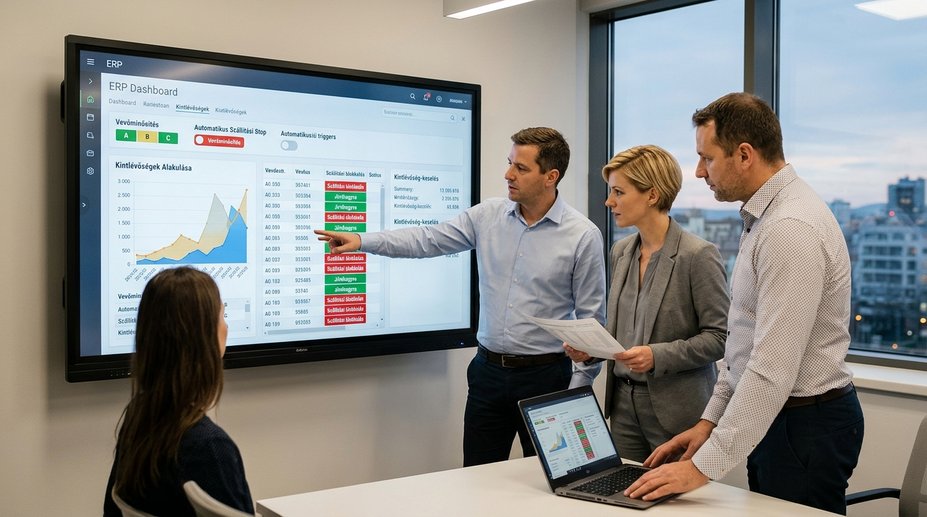
Route optimization should not exist in an isolated silo. True warehouse agility happens when your warehouse management software seamlessly connects with core business ERP processes. Real-time synchronicity between sales orders, inventory balances, purchasing schedules, and picking workflows provides complete visibility across your supply chain network.
When your business integrates pathfinding intelligence and slotting logic with enterprise resource planning, manual data entry disappears, order accuracy reaches near-perfect levels, and inventory movement becomes totally transparent across every branch or fulfillment location.
Streamlining your intra-logistics journey starts with taking control of your warehouse management workflows. By adopting smart route optimization, dynamic slotting, and intelligent picklist sequencing, you empower your team to achieve unprecedented order picking efficiency and scalability. Upgrade your operations today with Logzi ERP to eliminate wasted travel distance, elevate customer satisfaction, and drive sustainable growth for your growing enterprise.