Unlocking Scalable Growth: Why a Modern ERP System Is Essential for Hungarian SMEs
In today's fiercely competitive landscape, Hungarian SMEs face unique challenges and opportunities. Achieving scalable growth demands more than just hard work; it requires smart, integrated technology. A modern Enterprise Resource Planning (ERP) system isn't merely a software solution; it's a strategic imperative, transforming operations and paving the way for sustainable expansion.
The Evolving Landscape of Hungarian SME Growth
Hungarian small and medium-sized enterprises (SMEs) are the backbone of the national economy, constantly striving for efficiency and market share. However, many still grapple with fragmented systems, manual processes, and a lack of real-time data, hindering their potential. To truly thrive, these businesses must embrace digital transformation, moving beyond legacy systems to adopt sophisticated tools that streamline operations and empower informed decision-making.
Understanding Modern Enterprise Resource Planning Software
At its core, enterprise resource planning software integrates all facets of an operation—from finance and human resources to inventory and customer relations—into a single, unified system. Modern ERP systems offer a holistic view of the business, breaking down data silos and fostering seamless communication across departments. This integration is crucial for Hungarian SME growth, allowing businesses to adapt quickly to market changes and leverage their resources more effectively.
Embracing Cloud ERP Solutions for Agility
The shift to cloud ERP solutions marks a significant trend in the global and Hungarian market. Cloud-based systems offer unparalleled flexibility, accessibility, and cost-effectiveness compared to traditional on-premise deployments. They eliminate the need for significant upfront infrastructure investments and provide automatic updates, ensuring businesses always operate with the latest features and security protocols. This agility is vital for SMEs looking to maintain a competitive edge without heavy IT overheads.
Achieving Operational Efficiency Through Automation
One of the most immediate benefits of a modern ERP system is the dramatic improvement in operational efficiency. By automating repetitive tasks, from order processing to invoicing, businesses can significantly reduce human error and free up valuable employee time for more strategic initiatives. This focus on operational efficiency translates directly into cost savings and increased productivity across the board, supporting greater business scalability.
Digital Transformation: A Journey, Not a Destination
Implementing an ERP system is a cornerstone of any successful digital transformation strategy. It's not just about installing new software; it's about fundamentally rethinking how your business operates. A modern ERP facilitates this journey by providing the tools for process automation, data centralization, and enhanced collaboration, guiding Hungarian SMEs towards a more digitally mature future. This transformation is ongoing, requiring continuous adaptation and optimization.
Process Automation: The Engine of Productivity
Imagine the time and resources saved when your sales orders automatically trigger inventory updates, shipping notifications, and financial ledger entries. This level of process automation is a reality with modern ERP systems. It minimizes manual data entry, accelerates workflows, and ensures consistency across all business functions. For a Hungarian SME, this means faster order fulfillment, reduced administrative burden, and a sharper focus on core business activities.
Laying the Foundation for Business Scalability
As Hungarian SMEs grow, their operational complexities inevitably increase. A modern ERP system is designed with business scalability in mind, capable of evolving alongside your company. Whether you're expanding into new markets, introducing new product lines, or increasing your workforce, a robust ERP provides the infrastructure to manage this growth without disruptions. It ensures that your systems can handle increased transaction volumes and more intricate processes with ease.
Navigating Hungarian Regulations with NAV Integration
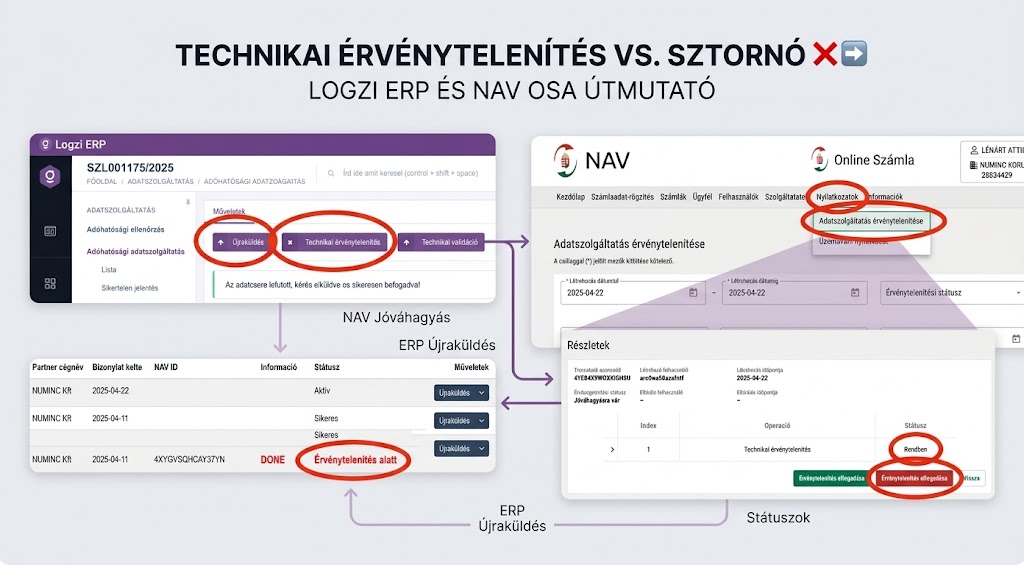
A crucial consideration for any Hungarian business is compliance with local regulations, particularly regarding taxation and invoicing. A key feature of an effective ERP for Hungarian SMEs is seamless NAV integration. This allows for automated reporting and online invoicing directly to the National Tax and Customs Administration (Nemzeti Adó- és Vámhivatal), ensuring compliance, reducing the risk of penalties, and saving significant administrative time. This localization is non-negotiable for smooth operations.
Empowering Data-Driven Decisions for a Smarter Future
In today's data-rich environment, the ability to make informed decisions is a significant competitive advantage. A modern ERP centralizes all business data, providing real-time insights through customizable dashboards and reports. This access to accurate, up-to-date information empowers leaders to identify trends, forecast demands, and optimize strategies. For Hungarian SMEs, embracing data-driven decisions means moving beyond intuition to make strategic choices backed by solid evidence.
Practical Steps for a Successful ERP Implementation
- 1. Conduct a Comprehensive Process Audit: Map out existing organizational workflows to identify bottlenecks, data silos, and manual tasks that require immediate automation. This foundational step is critical for effective ERP system implementation.
- 2. Choose Scalable, Cloud-Native Solutions: Select a flexible, cloud-based ERP to reduce upfront infrastructure investments, ensure seamless access, and effortlessly support long-term business scaling.
- 3. Ensure Local Regulatory and Financial Integration: Verify that the ERP platform complies with Hungarian accounting standards and provides automated integration with the NAV online invoicing framework. This is paramount for compliance and efficiency.
- 4. Prioritize Change Management and Continuous Training: Invest in structured onboarding and active internal communication to reduce resistance and boost employee engagement with the new software.
- 5. Adopt a Modular, Phased Rollout Strategy: Mitigate operational risk by launching essential core modules—such as finance and inventory control—before introducing advanced tools like CRM or supply chain optimization.
- 6. Leverage Real-Time Business Intelligence: Utilize centralized dashboards to aggregate operational data, enabling swift, accurate forecasting and data-driven decision-making.
- 7. Partner with Experienced Local Implementation Experts: Collaborate with trusted ERP vendors who possess proven industry knowledge and understand the nuanced operational landscape of Hungarian small and medium enterprises.
Industry Trends and Future Outlook
The ERP market is continuously evolving, with artificial intelligence (AI) and machine learning (ML) increasingly integrated to provide predictive analytics and enhanced automation. For example, recent reports indicate that the global ERP market is projected to reach approximately $75 billion by 2026, growing at a CAGR of 9.2%, driven by the demand for cloud-based solutions and digital transformation initiatives. Source: Statista, 2024. Furthermore, a 2025 forecast suggests that over 80% of new ERP deployments will be cloud-based, underscoring the industry's irreversible shift towards agility and remote accessibility. Source: Gartner, 2024 (projected for 2025).
These trends highlight the imperative for Hungarian SMEs to adopt modern ERP systems not just for current needs but to future-proof their operations. The ability to integrate with emerging technologies will be critical for sustained competitiveness.
The Logzi Advantage for Hungarian SMEs
In conclusion, the journey to scalable growth for Hungarian SMEs is intrinsically linked to adopting a modern ERP system. It's about achieving operational efficiency, enabling digital transformation, harnessing process automation, and ensuring business scalability through data-driven decisions and essential NAV integration. Embracing these capabilities is no longer optional; it's a fundamental requirement for thriving in the contemporary business environment. Consider how a tailored solution can streamline your processes, reduce errors, and propel your business forward. A robust ERP empowers you to focus on innovation and growth, confident that your foundational operations are optimized.