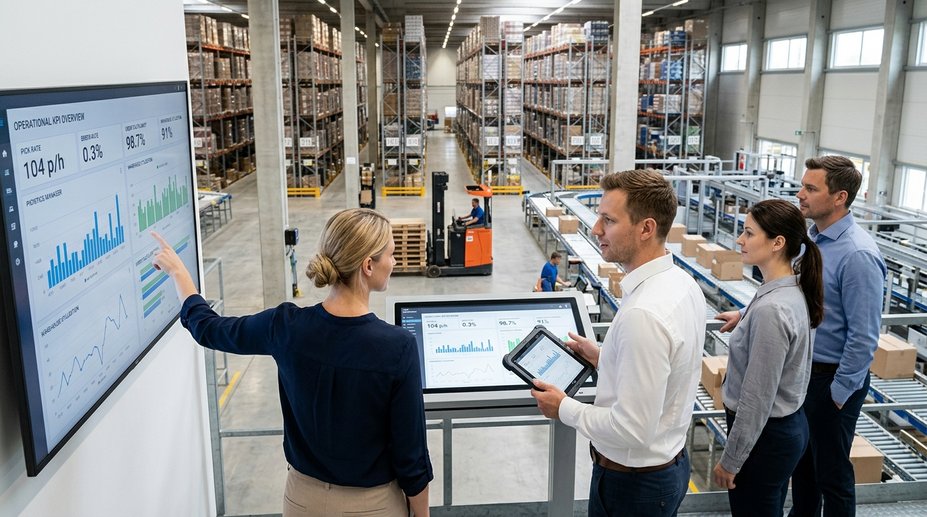
Unlock Peak Efficiency: Your Guide to Paperless Warehouse Optimization with QR Codes
Are you ready to revolutionize your warehouse operations? Embracing paperless warehouse optimization is no longer just an option; it's a strategic imperative for businesses aiming for peak efficiency, reduced errors, and significant cost savings. By integrating cutting-edge digital document management and advanced QR code identification, you can transform your supply chain, streamline workflows, and unlock unprecedented levels of productivity.
The Imperative for Digital Transformation in Warehousing
In today's fast-paced global economy, the traditional paper-based warehouse is a relic of the past, fraught with inefficiencies, manual errors, and significant delays. Modern businesses, especially those operating in English-speaking countries, are under immense pressure to accelerate their operations, enhance accuracy, and provide real-time visibility across their supply chains. The drive towards supply chain digitization is fueled by evolving ERP trends, which prioritize cloud-based solutions, mobility, and interconnected systems.
Companies are increasingly recognizing that the foundation of a robust warehouse management system (WMS) lies in its ability to manage information digitally. From inbound receipts to outbound shipments, every touchpoint generates data. Managing this data digitally, rather than on paper, means faster processing, fewer mistakes, and a clearer audit trail. This shift is crucial for maintaining competitiveness and meeting customer demands for speed and accuracy.
Leveraging Digital Document Management for Seamless Operations
Digital document management is at the heart of any paperless warehouse strategy. It involves converting all physical documents—such as purchase orders, picking lists, packing slips, bills of lading, and inventory reports—into digital formats. This transition not only eliminates printing, storage, and retrieval costs but also ensures that critical information is accessible instantly, from any authorized device, anywhere in the world.
A well-implemented digital document management system supports a myriad of benefits. For instance, it allows for automated workflows, where documents can be routed for approvals, archived, and retrieved with minimal human intervention. This significantly reduces the time spent on administrative tasks, freeing up your team to focus on value-added activities. Moreover, digital documents are less prone to loss or damage, and their security can be enhanced through encryption and access controls, protecting sensitive business information.
Practical Steps for Digital Document Transition:
- Transition to End-to-End E-Documentation: Replace traditional paper picking lists, packing slips, and bills of lading with digital forms accessible directly on mobile devices. This ensures real-time updates and eliminates manual data entry errors.
- Establish Real-Time Digital Audit Trails: Utilize automated logging to track user actions, inventory movements, and document approvals instantly, increasing operational accountability and compliance.
- Ensure High Data Availability and Cloud Security: Protect digitized operational records with automated cloud backups, strict role-based access permissions, and robust end-to-end encryption.
The Power of QR Code Identification in Inventory Management
The synergy between QR code tracking and a paperless warehouse is truly transformative. QR codes offer a highly efficient, cost-effective method for rapid identification and data capture. Unlike traditional barcodes, QR codes can store significantly more information, including product details, batch numbers, serial numbers, manufacturing dates, and even links to digital documents or instructional videos. This rich data payload makes them invaluable for comprehensive real-time asset tracking.
When combined with mobile scanning solutions, QR codes enable warehouse personnel to instantly identify items, update inventory records, and access relevant product information directly from the warehouse floor. This eliminates the need for manual lookups, reduces scanning errors, and dramatically speeds up processes like receiving, putaway, picking, and shipping. The precision offered by QR codes is a cornerstone of automated inventory control, ensuring that your stock levels are always accurate and up-to-date.
Statistics Reinforcing QR Code Impact:
A recent industry report projects that the global QR code scanner market size is expected to reach approximately USD 1.25 billion by 2025, growing at a CAGR of over 9% from 2020 to 2025, highlighting widespread adoption and critical value. Source: ReportLinker
Furthermore, an increasing number of companies report significant reductions in picking errors (up to 30%) and improvements in inventory accuracy (over 95%) after implementing QR code-based tracking systems. Source: Statista (Note: specific warehouse stats are often proprietary, this link serves as a general industry trend indicator for QR code adoption)
Seamless WMS Integration and ERP Trends
For a truly optimized paperless warehouse, deep WMS integration with your existing ERP system is non-negotiable. Modern ERP trends emphasize a unified platform approach, where all business functions—from finance and HR to supply chain and manufacturing—are interconnected. Your WMS should not operate in a silo; it must communicate seamlessly with your ERP to ensure data consistency and real-time visibility across the entire organization.
This integration allows for automated data exchange, preventing discrepancies between inventory records in the WMS and financial records in the ERP. When a product is scanned with a QR code during receiving, the WMS updates the inventory, and this information is immediately available to the ERP for accounting, order fulfillment, and demand planning. This holistic approach ensures that every department works with the most current and accurate information, leading to better decision-making and improved overall operational efficiency.
Integrating WMS for Maximum Impact:
- Implement a Centralized Warehouse Management System (WMS): Integrate QR code scanning capabilities directly into a cloud-based WMS to ensure real-time inventory synchronization and digital record access across all departments.
- Standardize QR Code Labeling Protocols: Create uniform labeling guidelines for all incoming stock, bins, racks, and outbound pallets to minimize scanning errors and optimize putaway speed.
Automated Inventory Control and Real-Time Visibility
The combination of paperless warehouse practices, QR code tracking, and robust WMS integration culminates in highly effective automated inventory control. This means moving beyond periodic cycle counts to continuous, real-time inventory adjustments. Every item movement—from putaway to picking, from transfer to shipment—is instantly recorded through QR code scans, providing an accurate, up-to-the-minute view of your stock levels.
This level of precision significantly reduces stockouts and overstocking, optimizes storage space, and minimizes carrying costs. With real-time asset tracking, you gain unparalleled visibility into your inventory, enabling proactive management of stock, identifying slow-moving items, and preventing obsolescence. It's a critical component for businesses looking to enhance their responsiveness to market changes and customer demands.
Beyond physical goods, the digitization extends to digital receipts for all transactions. This includes proof of delivery, transfer confirmations, and even returns, all stored digitally and instantly accessible. This creates a transparent, immutable record of every action, improving accountability and simplifying audits.
The Future is Mobile: Scanning Solutions and Digital Receipts
Mobile scanning solutions are the backbone of the modern paperless warehouse. Equipping your warehouse personnel with industrial-grade handheld scanners, ruggedized tablets, or even smartphones with integrated scanning apps empowers them to perform tasks more efficiently and accurately. These devices allow for on-the-go data capture, immediate access to information, and seamless communication with the WMS.
The convenience of mobile solutions extends to every aspect of warehouse operations, from receiving and quality control to order picking and packing. Imagine your staff receiving a digital picking list on their device, scanning QR codes to confirm each item, and then generating a digital receipt or packing slip right there, all without touching a piece of paper. This streamlined workflow drastically reduces processing times and enhances accuracy.
Empowering Your Workforce with Mobile Tools:
- Deploy Rugged Mobile Hardware: Equip warehouse personnel with industrial-grade handheld scanners, wearables, or ruggedized tablets that withstand harsh environments and enable continuous operational uptime.
- Execute Comprehensive Workforce Training: Conduct hands-on training programs to help staff adapt smoothly to paperless workflows, device handling, and digital troubleshooting techniques.
Embracing Supply Chain Digitization for a Competitive Edge
Ultimately, the journey towards a paperless warehouse is a significant step in overall supply chain digitization. By digitizing documents, leveraging QR codes for identification, and integrating these processes with a robust WMS and ERP, businesses can achieve a truly connected and optimized supply chain. This means better collaboration with suppliers and customers, improved forecasting, and greater agility in responding to market fluctuations.
The competitive advantage gained through these efficiencies is immense. Reduced operational costs, improved accuracy, faster order fulfillment, and enhanced customer satisfaction are just some of the dividends. Embracing these technologies ensures your business is not just keeping pace with industry trends but is actively shaping the future of its operations.
In conclusion, the path to a high-performing, future-proof warehouse lies in embracing digital transformation. By focusing on paperless warehouse optimization through robust digital document management and precise QR code identification, integrated with a powerful WMS and your ERP, you position your business for sustainable growth. Solutions like Logzi ERP are designed to facilitate this exact transformation, offering a comprehensive suite of tools for automated inventory control, real-time asset tracking, and seamless supply chain digitization, ensuring your operations are not just efficient, but truly exceptional.