Mobile ERP: Unleash Warehouse Speed with Dashlite
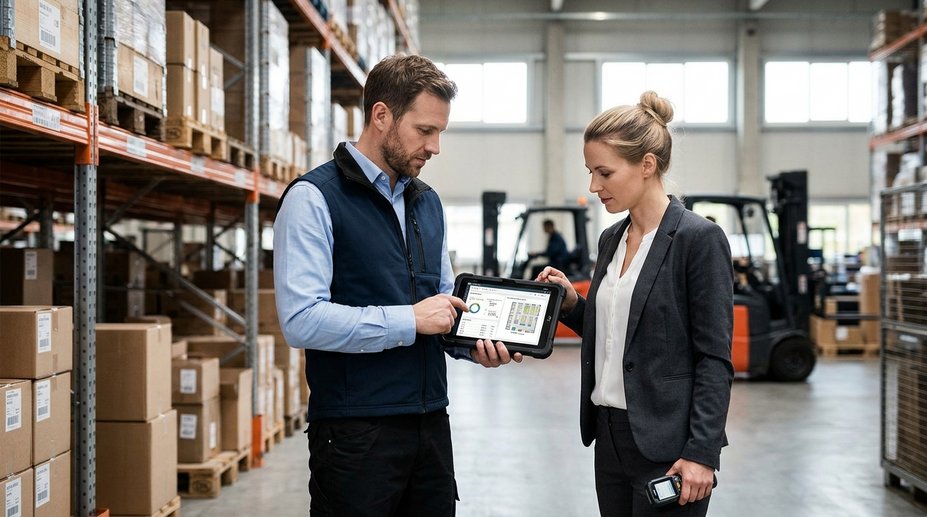
Modern fulfillment hubs can no longer afford to anchor their workforce to desktop computers or bulky stationary workstations. By pairing a responsive Dashlite mobile interface with a modern warehouse management system, enterprise teams unlock instantaneous real-time tracking across every aisle and pallet bay. Discover how deploying a mobile-first UI on handheld inventory scanners turns your physical floor operations into an agile, highly automated supply chain powerhouse.
The Shift to Mobile ERP in Modern Supply Chain Automation
For decades, warehouse operations relied heavily on paper pick-lists, desktop data entry, and batch-processed inventory updates. This legacy workflow created persistent blind spots, delayed order dispatching, and high error rates during peak seasonal surges. Today, the rise of cloud-native mobile ERP solutions is completely reshaping how warehouse managers, inventory controllers, and logistics specialists execute daily tasks. By bringing business intelligence directly to the warehouse floor, companies eliminate redundant data entry and accelerate order fulfillment cycles.
As global supply chains become more dynamic, instant access to central enterprise resource planning data is no longer a luxury—it is a baseline requirement. According to a recent industry report published by MHI and Deloitte, 85% of supply chain executives expect digital innovations, particularly mobile-enabled technology and real-time data tracking, to dominate industry operations within the next three years. Replacing stationary PCs with nimble mobile terminals enables frontline operators to receive, pick, pack, and ship goods with unprecedented precision.
Adopting a mobile-first approach does not merely mean scaling down a desktop interface to fit a smaller display. It demands a ground-up redesign focused on touch ergonomics, high visual contrast, fast screen rendering, and zero latency. When frontline workers possess intuitiveness at their fingertips, training times drop dramatically, worker fatigue decreases, and overall operational throughput reaches new heights across every shift.
Maximizing Floor Efficiency with Dashlite Dashboard Responsiveness
The Dashlite dashboard framework stands out as an exceptional foundation for mobile ERP interfaces due to its modular design, light resource footprint, and clean visual aesthetics. In a fast-paced logistics setting, visual clutter leads directly to user confusion and operational slowdowns. Dashlite solves this by streamlining key metrics—such as active picking queues, bin location maps, and pending replenishment tasks—into clean, actionable mobile widgets.
A modern responsive design ensures that whether an employee carries a lightweight 5-inch smartphone or operates a ruggedized 10-inch industrial tablet, the user interface dynamically adjusts to fit the screen viewport effortlessly. Button sizes, font hierarchies, and icon placements adapt intelligently to maintain maximum touch usability. This level of mobile-first UI design reduces accidental taps and allows floor managers to monitor live operational KPIs on the move without returning to an office desk.
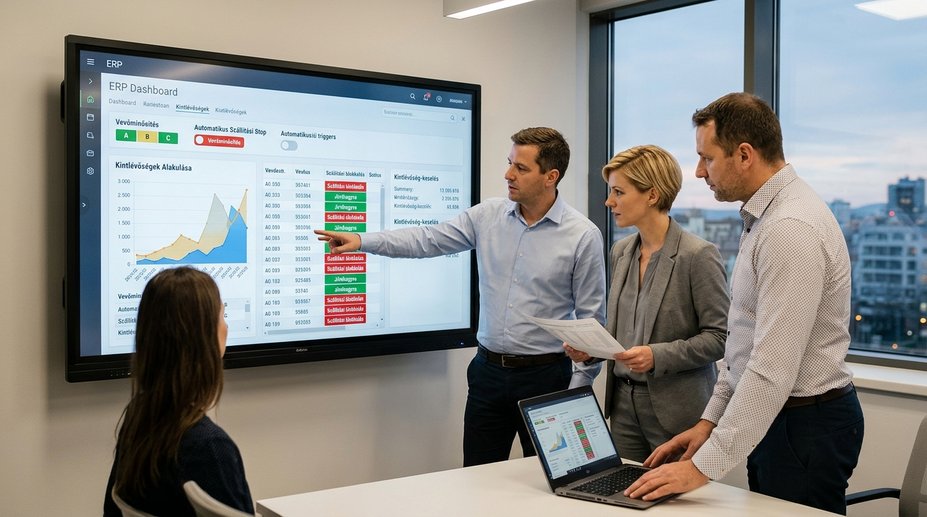
Furthermore, customized Dashlite components allow enterprises to highlight critical stock alerts instantly. For instance, low-stock warnings, mismatched serial numbers, or urgent expediting requests can be displayed in vivid, color-coded banners. By standardizing these visual indicators, inventory management teams maintain total context over their operational workflows, regardless of device form factor.
Key Execution Strategies for Mobile Warehouse Operations
Transitioning from static desktop workstations to a fully mobile warehouse environment requires intentional UI planning and smart device deployment. Here are essential operational recommendations to maximize the effectiveness of your mobile warehouse management system:
- Prioritize Mobile-First Responsive Layouts: Tailor Dashlite UI components specifically for smaller screen viewports, ensuring effortless navigation on smartphones and industrial handheld devices.
- Leverage Enterprise Mobile Terminals: Integrate ruggedized handheld scanners and mobile terminals equipped with integrated hardware barcode readers for fast, accurate data collection.
- Implement Touch-Optimized Dashlite Controls: Use enlarged tap targets, intuitive swipe gestures, and simplified form fields to reduce input errors on the warehouse floor.
- Enable Offline Caching and Auto-Sync: Design the interface to cache critical transaction data locally, allowing uninterrupted operation during Wi-Fi blind spots and auto-syncing upon reconnection.
- Optimize Real-Time Inventory Visibility: Ensure instantaneous synchronization between mobile devices and the core ERP, giving floor workers immediate access to live stock levels and picking orders.
- Enhance Ergonomics and Lighting Adaptability: Incorporate high-contrast color palettes, dark mode support, and scalable text to maintain clear readability in varying warehouse lighting environments.
- Deploy Role-Based Access and Device Management: Implement secure, streamlined login methods (such as PINs or RFID badges) tailored for shared handheld devices to protect sensitive enterprise data.
Bridging Hardened Hardware and Soft UI: Handheld Scanners & Mobile Terminals
Enterprise warehouse management relies heavily on specialized hardware that can withstand harsh environments, accidental drops, extreme temperatures, and continuous daily use. Rugged handheld inventory scanners and specialized mobile terminals running Android Enterprise are the backbone of modern logistics. However, industrial hardware is only as effective as the software interface running on top of it.
A custom-tailored Dashlite interface bridges the gap between hardware scanner capabilities and backend enterprise databases. When a warehouse operator scans a 1D or 2D barcode, the Dashlite mobile-first UI instantaneously processes the input, validates the item against active purchase orders, and updates the stock quantity in real time. This immediate feedback loop eliminates manual double-checking and ensures that inventory movements are logged the second they physically happen.
Recent technological market analyses from Statista indicate that the worldwide logistics automation market is projected to expand to over $100 billion by 2030. This exponential growth is heavily propelled by widespread investments in handheld devices, automated data capture, and cloud-connected ERP solutions. Companies that pair ruggedized physical terminals with flexible, modern web interfaces ensure their hardware investments deliver long-term efficiency returns.
Overcoming Offline Blind Spots in Large Storage Facilities
One of the biggest physical hurdles in large-scale logistics operations is patchy wireless network coverage. Multi-story racking systems, concrete walls, metallic structural beams, and dense inventory stacks often create Wi-Fi blind spots within expansive facilities. If your mobile ERP relies entirely on a constant network connection, a momentary drop in signal can halt work, freeze applications, or corrupt data entry.
To solve this challenge, modern Dashlite mobile architecture leverages progressive web apps (PWAs) and local caching mechanisms. When an operator moves into an unmapped dead zone, the application seamlessly stores scan logs, pick confirmations, and stock adjustments locally in device memory. Floor staff can continue working uninterrupted without experiencing frozen screens or error messages.
Once the mobile terminal re-enters a active Wi-Fi coverage area, an automated background synchronization protocol executes automatically. The application uploads the local queue to the central server, reconciles inventory counts, and pulls down fresh picking commands. This continuous operational resilience prevents frustrating operational downtime and preserves reliable real-time tracking across your entire supply chain network.
Unifying ERP Data for Real-Time Inventory Control and Pick Accuracy
In high-volume B2B and B2C ecommerce fulfillment centers, picking accuracy is directly tied to customer satisfaction and profitability. Sending the wrong product or incorrect quantities results in expensive return processing, restocking fees, and damaged brand reputation. Utilizing a unified mobile ERP ecosystem powered by responsive Dashlite templates transforms picking accuracy into a systematic science.
When a customer places an order online, the request bypasses batch queues and routes immediately to the warehouse floor. Mobile terminals display the most optimal picking path through the facility, guiding workers bin by bin. Integrated barcode scanning confirms item correctness at each stage, issuing audible and visual alerts if an incorrect barcode is scanned. This double-layer validation ensures pick accuracy rates approaching 99.9%.
Furthermore, management gains instant visibility into high-level enterprise metrics. Live dashboards monitor order throughput per hour, worker productivity stats, and inventory turnover ratios across multiple locations. Having instant access to clean analytics allows management to reallocate labor resources dynamically during peak processing hours, ensuring deadlines are consistently met without paying unnecessary overtime costs.
Embracing a responsive, mobile-first approach to enterprise resource planning is no longer just a technological upgrade—it is a core strategy for sustainable growth. By unifying rugged mobile terminals, smart barcode scanning, and intuitive Dashlite dashboard interfaces, your logistics operations achieve unmatched accuracy, speed, and real-time visibility. Transform your warehouse today and empower your workforce with the powerful, flexible capabilities of Logzi ERP to elevate your operational efficiency to the next level.